
Making a winter shelter for stray cats: an act of kindness
With the arrival of winter, stray cats face difficult conditions, and the bitter cold threatens their survival. Building shelters for these little vagabonds is a good way to help them get through the winter. In addition to saving lives, this initiative benefits the whole community by reducing nuisance and promoting harmonious coexistence between cats and local residents.
Small shelters provide a vital refuge for stray cats, offering them protection from the cold, damp and predators. These structures have several advantages.
- Reduce the risk of disease and hypothermia: A well-designed shelter keeps cats warm and dry.
- Stabilize colonies: Cats have a safe place to rest, which can limit wandering.
- Promote harmonious coexistence: Helping stray cats reduces the risk of them finding shelter in inappropriate places, such as under cars or in sheds, and causing trouble.
How do you build an efficient, well-insulated shelter?
Here is a simple and effective method for building your own shelter. The shelter should be just big enough for one cat, or two at the most, to fit inside. A smaller space retains body heat better, but it must be big enough to allow the cat to move around comfortably. Please note that some materials, such as straw, are generally easier to find in summer and autumn. So it’s a good idea to get started on this project before the cold weather sets in!
- A sturdy Rubbermaid-type plastic bin of about 40 L or 50 L.
- Styrofoam board for insulation
- Straw (not hay, cloth or blankets, which retain moisture and/or freeze); straw can be found at hardware stores or nurseries.
- A utility knife or saw to cut the opening
- Weather-resistant adhesive tape
- Bricks or wooden blocks to elevate the shelter
1. Fill the bottom of the bin with straw, a breathable insulating material. Avoid using hay or blankets, as they retain moisture.
2. Place Styrofoam sheets on the inside walls of the bin, along the bottom and in the lid, creating an insulating layer on all inside surfaces of the bin.
3. On one of the sides, cut an opening about 15 cm (6 in.) in diameter through the bin and the Styrofoam to allow the cats to enter. Position the entrance slightly above the ground to prevent snow or water from getting in.
4. Tape the lid on top and place the shelter in a quiet spot protected from the wind. Use bricks, wooden blocks or other supports to raise the shelter slightly off the ground. Tilt it slightly backwards to allow rainwater to run off easily in bad weather. We recommend placing a heavy object on top of the shelter to prevent it from moving in strong winds.
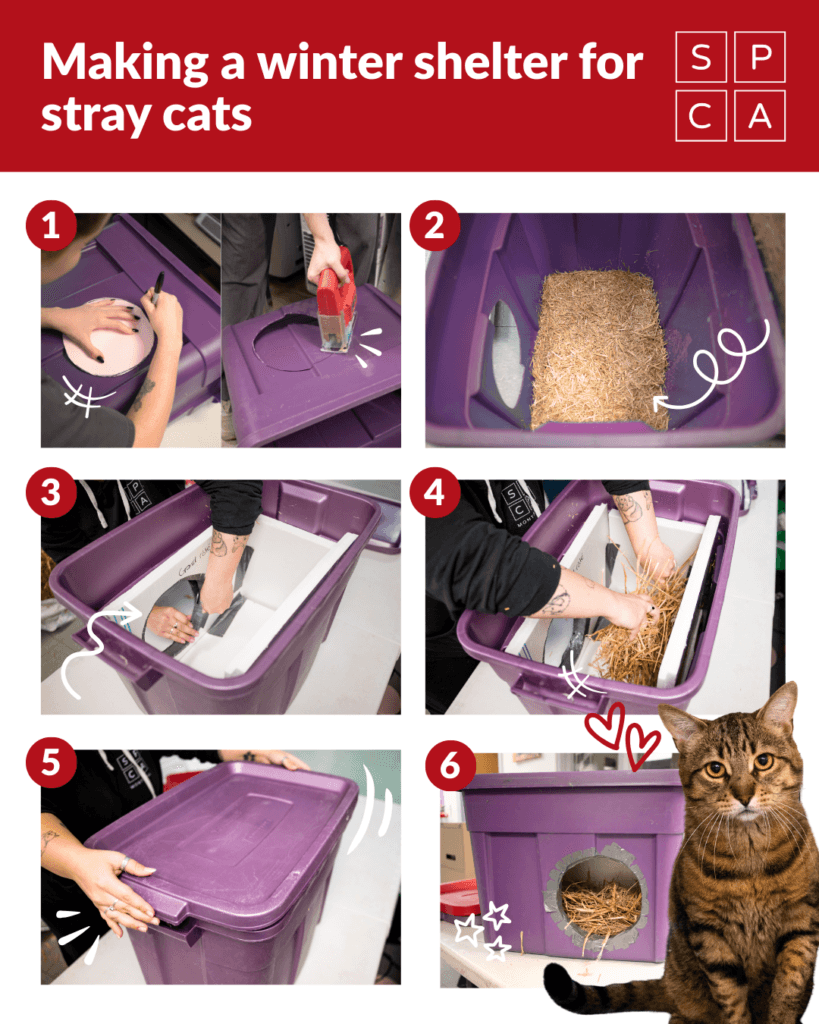
Click on image to enlarge.
Go for a ready-made shelter
If you’re short on time (or not particularly keen on DIY!), ready-made shelters are available from pet shops, some animal shelters or online (Home Depot, Amazon, etc.). Choose a model adapted to cats’ needs, i.e., that’s the right size, properly insulated and easy to maintain.
Prevent intrusion by other animals
You’ll need to take some precautions to make sure the shelters are only used by cats::
- Ensure that the shelter opening is no larger than about 15 cm in diameter.
- Place shelters in quiet areas, away from food sources that attract wildlife. For example, install in an area frequented by cats, but which is less attractive to other animals (such as near a house or fence).
- Add an access tunnel or flap at the entrance to discourage wild animals less agile than cats.
Using shelters responsibly
Shelters must be maintained to remain effective throughout the winter. Regularly check that the interior is dry, and replace the straw if it is damp or soiled. Clear snow from around the shelter to keep the entrance accessible, and make sure the insulation is intact.
In addition to shelter, stray cats need food and water. Place warm water in frost-proof or heated bowls to prevent it from freezing. Providing food, at set times only, will also help cats stay healthy and cope with winter. However, don’t leave food out all night, to avoid attracting predators and other unwanted visitors.
Helping stray cats in a sustainable way
Building cat shelters is part of a global approach that includes trap-neuter-release-maintain (TNRM) programs. These initiatives sustainably reduce the stray cat population while improving their well-being.
By offering winter shelter to stray cats, you are acting both responsibly and compassionately. Together, we can offer them a chance to get through the cold season with dignity and promote harmony between all living beings in our neighbourhoods!
Tutorial videos
To help you build safe shelters, you can also watch the following videos: